
Reflection: Psalm 2

I love Advent, and at the beginning of this period I have the tradition of playing Handel’s Messiah. I have done this on for almost 30 years. As soon as I come home from the first Sunday in Advent service, I put Messiah on and get lost not only in the music, and the feelings of the season, but also the memories it conjures up of previous Christmastides.
Charles Jennens brought the lyrics together from the King James Bible and the Book of Common Prayer. In Part II, we hear the bass voice sing “Why do the nations so furiously rage together?” This draws directly from Psalm 2.
What I love about this section is the deep long swirling runs over the words like rage, vain, and imagine. It feels like a building tempest of rebellion.
The following three songs from Messiah all draw from the Psalm 2 text, ending with the famous Hallelujah Chorus.
• Let us break their bonds asunder — Psalm 2:3
• He that dwelleth in heaven — Psalm 2:4
• Thou shalt break them — Psalm 2:9
This starts with asking the question,
Psalm 2 v 1
Why do the nations conspire (rage) and the peoples plot in vain?
It wonders why earthly rulers and nations are rebelling against the Most High God, and points out this is a pointless endeavor. They want to break the restrictions He has placed on Creation, rather than accept His rule and reign.
God’s response is to laugh at their schemes and machinations, and explains how He has installed His Anointed One in Jerusalem.
Psalm 2 v 5-6
He rebukes them in his anger and terrifies them in his wrath, saying, “I have installed my king on Zion, my holy mountain.”
From our point of view, this is clearly a messianic psalm as it goes on to say,
Psalm 2 v 7-8
He said to me, “You are my son; today I have become your father. Ask me, and I will make the nations your inheritance, the ends of the earth your possession.
What I find so extraordinary is that God calls this king His son. From an ancient Israelite perspective, who were not fully aware of the revelation of Christ, this must relate to the idea that the king’s authority was derived from a spiritual source. Much like how we have the idea of the ‘divine right of kings’ in the Middle Ages.
But through a Christian lens, the psalm takes on a grander vision, where Jesus rules Creation and humanity must choose whether they submit or live in rebellion.
One aspect of this psalm which is odd is the command to kiss the king,
Psalm 2 v 12a
Kiss his son, or he will be angry and your way will lead to your destruction
This is an intimate act of submission, not simply bowing. But kissing. Here, my mind is drawn to the kiss from Judas in the garden. Which not only led to Christ’s crucifixion, but also Iscariot’s suicide. The Gospel narrative seems to turn this verse on its head.
It is important to pay attention to those moments in the ministry of Jesus which invert the Old Testament expectations. These not only represent key moments of the story to take notice of, but also resolves the tensions created in the previous parts of the Bible. The text is like a melody which rises in tension and then the life of Christ fulfills it and brings it back to the root note of the musical scale.
I can’t help but sing this psalm when I read it out loud. Handel’s oratorio is so deeply ingrained in my psyche. This psalm not only shows there is no point rebelling against God, but as we submit more to Him and the image of His Son, then He will become our place of safety from the storms of life.
Psalm 2 v 12c
Blessed are all who take refuge in him
If you enjoyed this article, please consider subscribing to my SubStack.
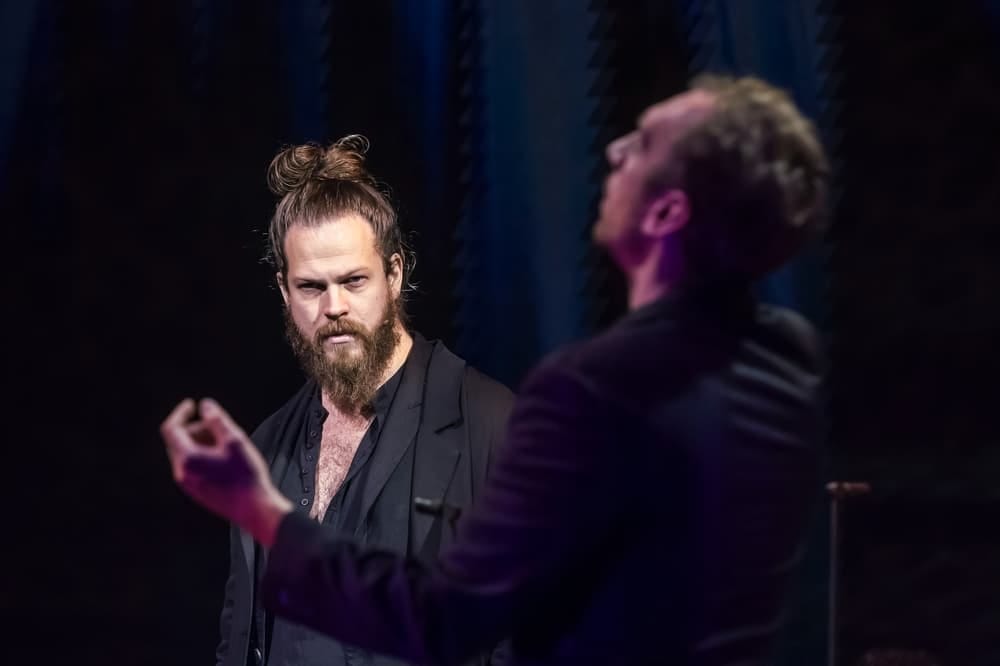
Image: Cody Quattlebaum, left, and conductor Gregory Batsleer in Handel’s Messiah
Your last paragraph says it all... I can’t help but sing this psalm when I read it out loud. Handel’s oratorio is so deeply ingrained in my psyche. This psalm not only shows there is no point rebelling against God, but as we submit more to Him and the image of His Son, then He will become our place of safety from the storms of life.... Thank you for this!
The Vulgate version of verse 12 has "embrace discipline" which perhaps carries a simiar thought if not exactly the same?