
Reflection: Psalm 91

Psalm 91 held a special place in my father’s heart. Whenever work weighed heavily on him or life felt overwhelming, he’d turn to this psalm in prayer. He would often quote its sentiments on refuge and protection, reminding himself of its promise. It became his anchor in the difficult seasons.
Even now, as I read the psalm, I can hear my dad’s voice speaking its words. Later in life, my father became my confidante, and when I shared my own personal struggles, he’d say, “Go and read Psalm 91. Go and pray it”.
That simple encouragement still carries weight within my soul. Writing this reflection feels like stepping back into those conversations, letting the psalmist speak comfort and strength into my life, just as it did for him.
Psalm 91 v 1-2,
Whoever dwells in the shelter of the Most High will rest in the shadow of the Almighty.
I will say of the Lord, “He is my refuge and my fortress, my God, in whom I trust”.
In the opening verses of Psalm 91, we encounter four powerful names of God.
El Elyon, the Most High
El Shaddai, the Almighty,
Yahweh, the LORD, our personal covenant God;
Elohim, the Divine One
In verse 1, we encounter He who is the Most High God. The One above all other gods.
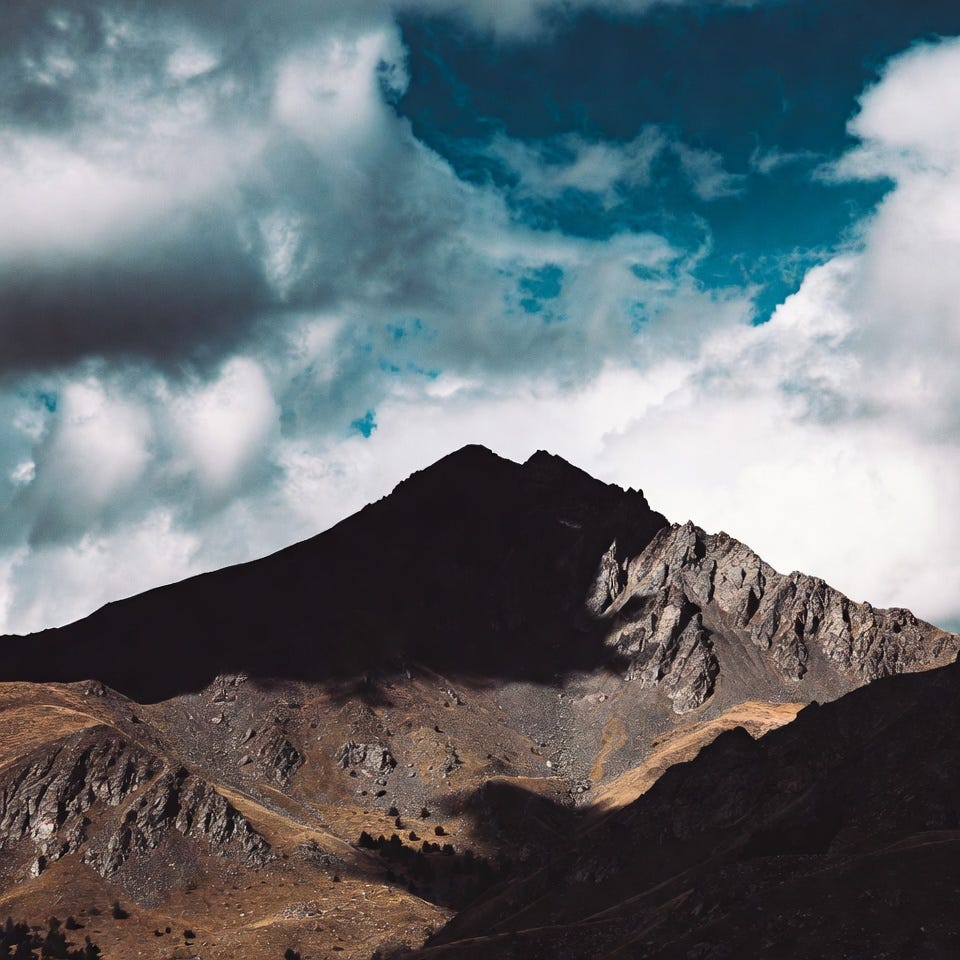
El Shaddai means the Almighty. This comes from the Hebrew word which means destroyer and one who lays waste. Shaddai could also be connected with the Akkadian word for mountain. This may explain why the psalmist mentions resting in the Almighty’s shadow. Like a walker might sit in the shadow of a great mountain.
Yahweh is the name God reveals to Moses as part of the Covenant. It’s His own personal name and it means ‘He Exists’.
Other ancient gods are named after physical entities like the Sun or Moon. For example, Zeus is named after the sky, Baal means a master, and Athena was likely named after the city. But, our God is named ‘I am that I am’. A name which is self-referential and beyond the created order.
Elohim is the divine category for spiritual beings in Hebrew. The psalmist states that out of all the spiritual entities, the Lord is the one he trusts in.
Together they paint a rich picture of the One we shelter in. These first verses should be a creed for daily life.
The psalm also stands as a polemic against Resheph, the Canaanite god of plague and pestilence.
Psalm 91 v 5-6
You will not fear the terror of the night, nor the arrow that flies by day, nor the pestilence that stalks in the darkness, nor the calamity that destroys at noon.
Resheph was often pictured as an archer, so phrases like “the arrow that flies by day,” “pestilence that stalks in darkness,” and “destroys at noon” all echo his attributes.
The psalmist declares that those who shelter in the Most High have nothing to fear from Resheph, as God’s protection is greater.
Even though we don’t name our troubles after ancient gods like Resheph, the fears they represent still feel real today. Whether it’s illness, sudden loss, or unseen threats, we all face our own “arrows” and “plagues”. This psalm reminds us that whatever form our troubles take, they’re no match for God’s grace.
Psalm 91 v 13
You will tread on the lion and cobra;
you will trample the young lion and serpent.
Further in the psalm we read a parallelism mentioning lions and snakes. The Hebrew word for serpent here is tannin, which is often associated with sea monsters and symbols of cosmic chaos.
The ‘young lion’ represents unjust royal power in the ancient world.
Together, they show that God’s protection extends not just to physical dangers, but to both chaotic spiritual forces and oppressive human rulers too.
Psalm 91 threads itself through the life of Christ too. Not only does Satan use it as a verse out of context to tempt Jesus in wilderness, but it prophetically states that as He loves the Father, His life would extend forever.
Psalm 91 v 16
With long life I will satisfy him and show him My salvation.”
Psalm 91 speaks powerfully to me. When we deliberately take time to pause and shelter in the love of the Most High, we are doing more than seeking comfort, we are spiritually protecting ourselves from the destructive forces at work in this world.
It’s an active declaration that we belong to a God who is greater than any threat we face, whether self-inflicted or not.
You helped me discover Psalm 90 (91) as a daily shield against modern threats (whether real or perceived).
What stayed with me most was the way the psalm seems to live inside the memory of your father before even becoming interpretation.
The opening carries something very human and real.